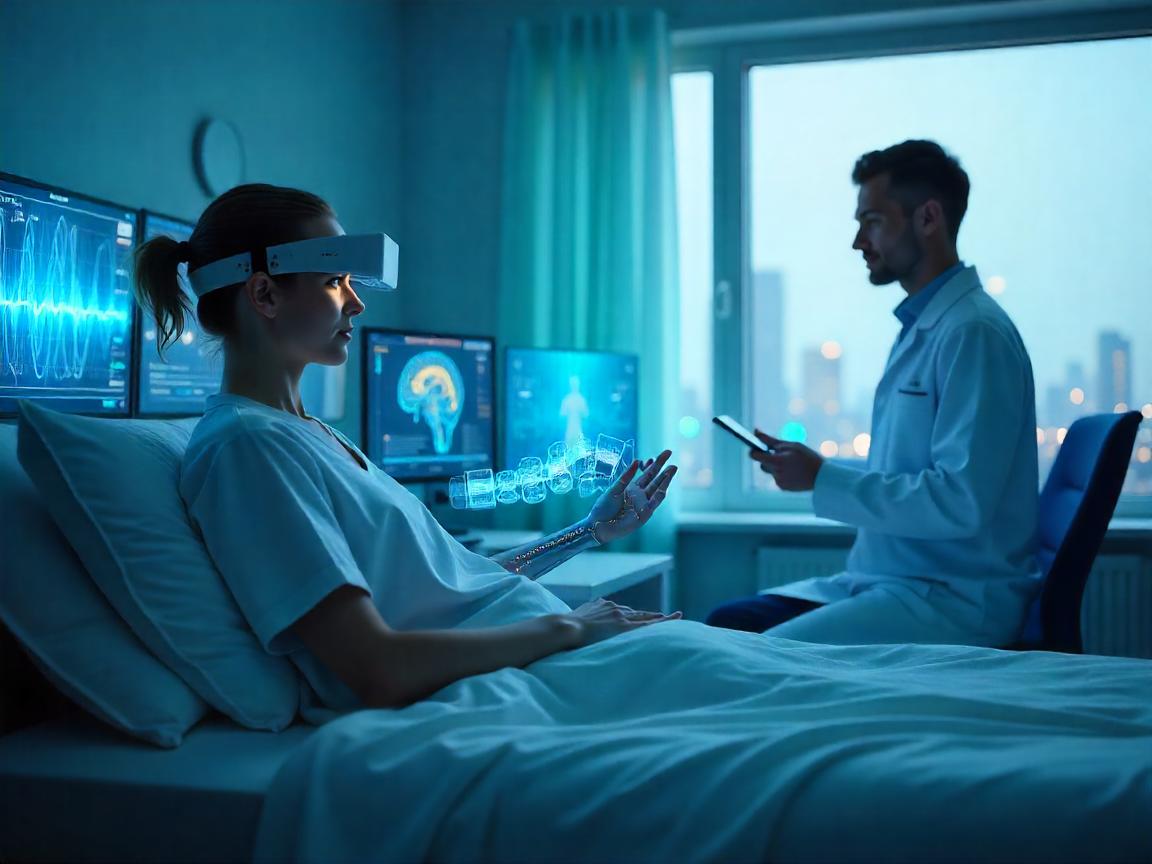
The Thought Revolution Has Begun
Imagine if there was a possibility to text somebody without lifting a finger? Or just can scroll through your phone by thinking about it? It is one of the pages of the cyberpunk novel, but it is the position on the edge of mental-tech revolution that we are taking. Brain-computer interfaces (BCIs), that decipher neural signals to control over digital systems, are now outside the realm of academic laboratories. Due to the fast development of firms, such as Neuralink and Synchron , they are creeping into hospitals, homes, and maybe thence the ordinary. And the effects are much further-reaching than what we’ve experienced in tech post smartphone.
From Sci-Fi Fantasy to the Surgical Reality
When Neuralink’s demo monkey played Pong using his brain in 2021, many considered it to be a PR stunt. However, standing behind that viral moment was a decade of deep neuroscientific work. Neuralink’s system is based on a coin-sized implant called “Link” that is used to record electrical activity of neurons and convert them to digital commands. The company had approval from FDA for a debut human clinical trial in May 2023 — and within a year, they had their first human patient that was moving a computer cursor with only thought.
Synchron, the quieter competitor of Neuralink, is going to tread the safer path with “Stentrode” — a minimally invasive device that is inserted through blood vessels. The very first trial participant of the U.S. for the study of Synchron, made emails and did some shopping only with brain signals. He only required a catheter, not an open brain surgery. That is nothing short of a herculean jump in the direction of scaled-up adoption of BCI.
Practical Use Cases: Healthcare First, Consumer Next
The first practical and life changing applications are seen in medicine. BrainGate consortium has had people use their thoughts to operate robotic arms spelling messages, and even turning pages of e-books. A man with ALS was able to communicate at the rate of 62 words per minute in a 2022 trial, making use of a neural implant system (Nature, 2022).
Through mobility, BCIs are being studied for;
- Predicting epileptic seizures through detection of the pre-ictal patterns of the brain.
- Monitoring the activity of the brain to cure depression and PTSD.
- Autonomy and control of exoskin and neuro-prosthetics for spinal injury patients.
- Giving patient with locked-in syndrome the ability to communicate once more.
These are not “experiments” for families who get to watch people they care about regain autonomy — these are miracles in progress.
The easily ignored questions no one is loudly enough asking.
Each new step of tech results in a shadow. BCIs generate some serious ethical and societal questions. If a company gets the ability of decoding your motor intentions, then what is there to stop them from having the access to the emotional states? Mood tracking? Political preferences? The data from your neural activity is brutal,personal — and very precious.
According to ethics professor Dr. Nita Farahany, at Duke, we see coming “wave of cognitive surveillance.” Speaking about real cases of companies using EEG bands to monitor the focus of employees, she does it in her book “The Battle for Your Brain” (2023). It is already taking place in countries such as China. The United States has no regulation on the neural data. That’s chilling.
Not to mention the problem of enhancement. If BCIs increase memory or cognition someday, will the rich become superhuman leaving people behind? It is not difficult to picture a world in which human beings who are neuro-augmented leave all other people behind.
Case in Point: A Second Chance at Life
Look at Jen French, co-founder of Neurotech Network. When her spine got injured and she ended up paralyzed, she was amongst the first patients to receive a BCI-connected FES system. Now, she is able to move around for short distances with the help of brain-controlled electrical impulse. ‘It’s not all just function’, says she. “It’s dignity.” Her story confirms them not to be just gadgets but indeed freedom paths.
Conclusion: Will We Become the Interface?
As a journalist who has covered emerging tech for almost twenty years, I say this. It has been with no other technology than with BCIs that I have been made to reconsider the concept of humanity. Not smart phones, not AI, not even the internet. We are now literally merging minds with machines –- not metaphorically.
The issue is not that we can do it. That’s being responded to each day in operating rooms and research laboratories. The real question is: How shall we do it responsibility?
Here, we’re at the very start of something deep. Not only a new interface, but a new identity. And we had better get ready — the mind will be the next foray into digital territory.