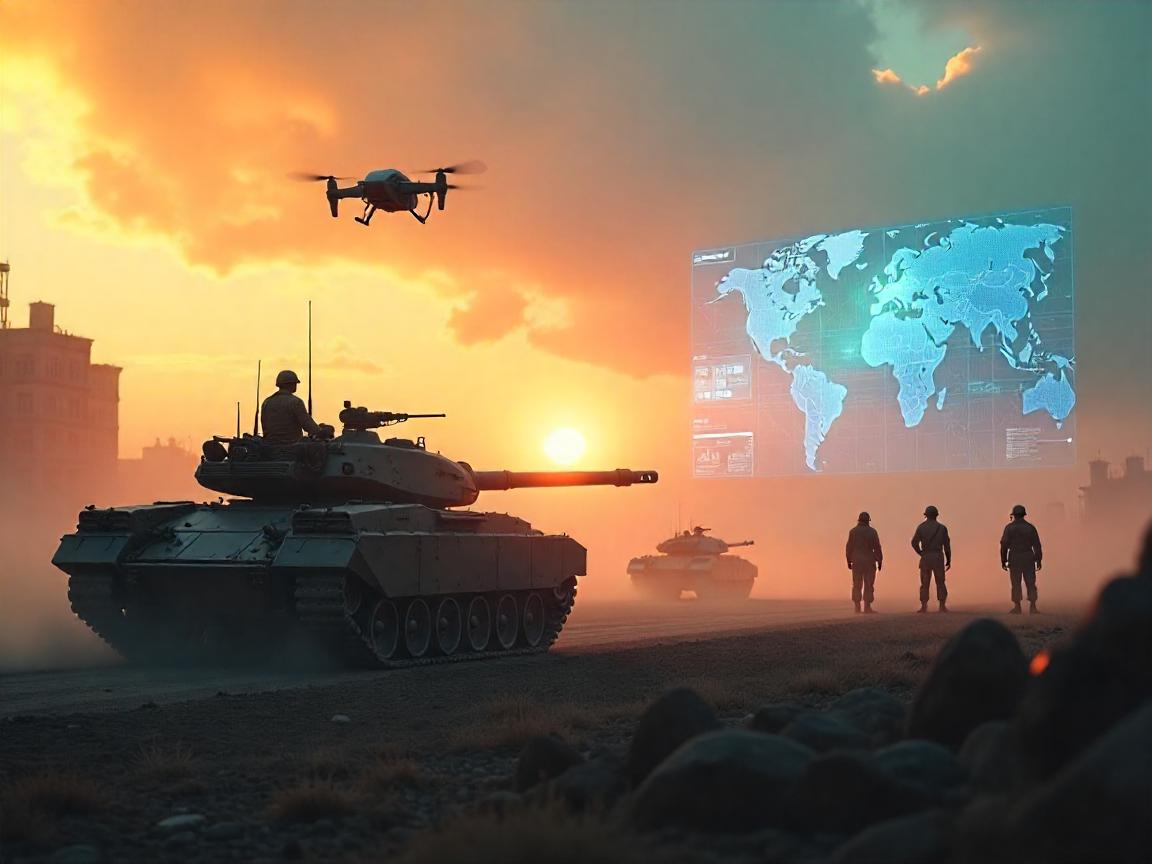
The Dawn of Algorithmic Warfare
AI and Robotics: A few decades in the past, battle involved mainly soldiers in boots and armed with bullets. Currently, things like bots, drones, and algorithms are big in AI. It is common to picture soldiers in action, but there are hidden swarms of autonomous systems conducting strikes to an exact plan, spotting movements of the enemy, and deciding on action in a matter of seconds. We now live in the time of algorithmic warfare.
Defense strategies today include more than just the decisions of individual people. AI technology is being used in the military by countries for both operational purposes and day-to-day tasks. As tension is growing in Eastern Europe, East Asia, and the Middle East, we are moving from digital weapons development to their use in real attacks. As shown in the 2025 proposal from the U.S. Department of Defense, a huge portion of $1.8 billion, or one-tenth of the military’s budget, is aimed at AI-based systems.
Transforming from “Boots” to “Bots” – Reinventing the Ideas of Modern Warfare
AI has made a major difference in how military strategies are developed for the battlefield. It’s not only about drones that can take off and go on missions without involving a human. There are now algorithms that imitate how a battlefield operates in real time, allowing tactics to change faster than a human can.
In the Gaza operations in 2024, Israel used a special AI system called “Fire Factory.” Identifying and targeting became easy, making it possible to launch strike after immediate strike. Opinions differ from using just speed as the major determining factor. Once turned on, the systems have few human controls, so the next question is: Are there were risks if a machine decides instead of a human in combat?
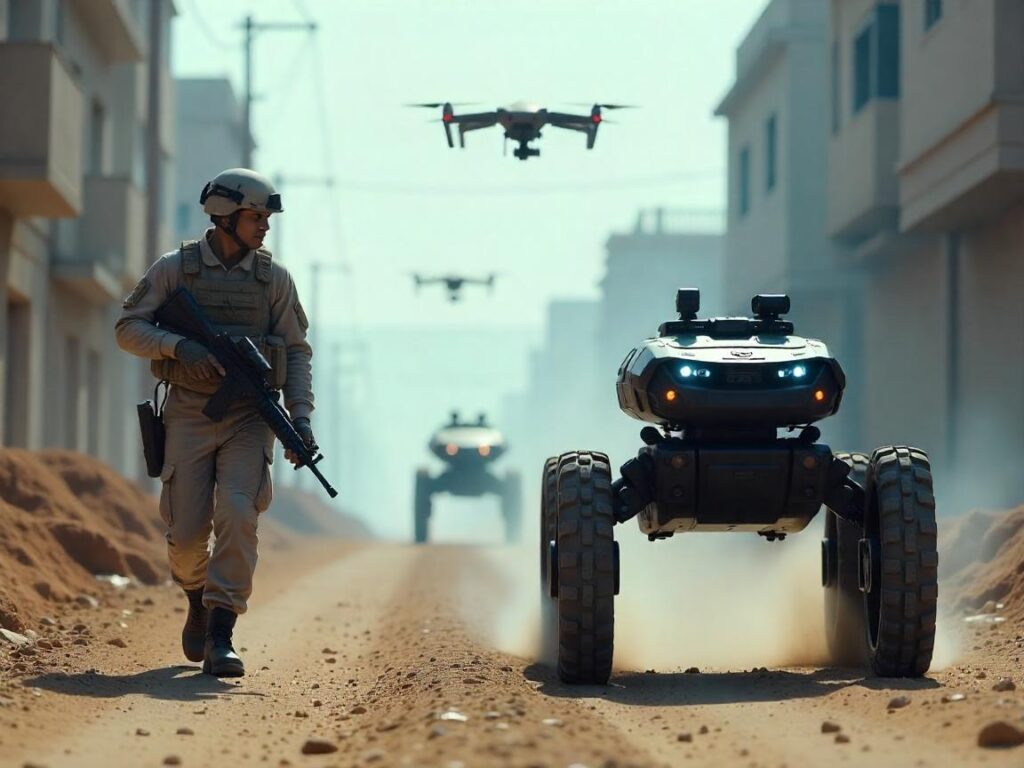
Global Power Players Fueling the AI Race
Since warfare is evolving, international competition is changing as well. Both allies within NATO and nations outside of it are rushing either to take charge or simply not fall behind. For example, China is quickly inventing and introducing intelligent drones and robotic tanks as part of its “Intelligentized Warfare” plan for future years. In addition, Russia has used Lancet munitions in Ukraine, some of which work semi-autonomously.
After all this, the U.S. is developing the surveillance-based Project Maven into different AI methods for its military. Meanwhile, India redoubles its defense on the border with robots, and NATO pushes for AI to prevent any technology gap from becoming a problem for security.
What actions are currently taking place on the part of nations?
- U.S.: Among such projects are Project Maven, the “Loyal Wingman” concept for AI drones, and command modules designed by DARPA for AI.
- China: Simulations for swarms of AI, trials for robotic soldiers, schools for drones in the PLA
- Russia: Autonomous version of kamikaze drones are now being used in Ukraine
- India: Using AI for border surveillance on LAC, and developing locally made combat robots
The Ethics Minefield: Should We Reliable Code in Situations of Combat?
The main issue with all this technology? Ethics are more important than development in technology. There has repeatedly been concern mentioned by Human Rights Watch and the UN about LAWS (Lethal Autonomous Weapons Systems). Some sources say that a Kargu-2 drone in Libya killed targets without human intervention in 2020, which may have been the initial autonomous kill. And let’s be honest: that’s terrifying.
As AI is used more and more, it is clear that poor decisions can cause big problems. According to Dr. Peter W. Singer, the most frightening situation is where an AI does exactly as it was instructed, without having a sense of right and wrong. Is it possible that, under severe stress, these systems will choose efficiency at the expense of ethics?

Tomorrow’s Conflicts, Today’s Decisions
There is a lot of talk about regulation, yet the actual decisions are going slowly. Even as the UN debates an international AI treaty, countries are trying out new military technologies in proxy wars. From my experience as a defense tech consultant, AI was able to beat human generals in over 90 percent of the simulations I observed at Fort Meade. It’s not a trend; it’s telling us that something is very wrong.
AI tends to have dual uses since what a system detects at an airport today may also control missiles in the future. Since there is little difference between civilian and military technologies, it is more difficult to ensure global rules are followed.
Final Word: There is Still Much We Can Do
The threat to us is more serious than only witnessing an arms race. Battle tactics are not only changing, but warfare is being transformed. My concern? Our actions are moving ahead of our sense of right and wrong. Although machine learning and neural networks are used by the military-industrial complex, we have to make sure ultimate command always rests with humans.
With billions being put into autonomous defense, the world has to choose whether to allow it. or will we make the decision before technology takes over?