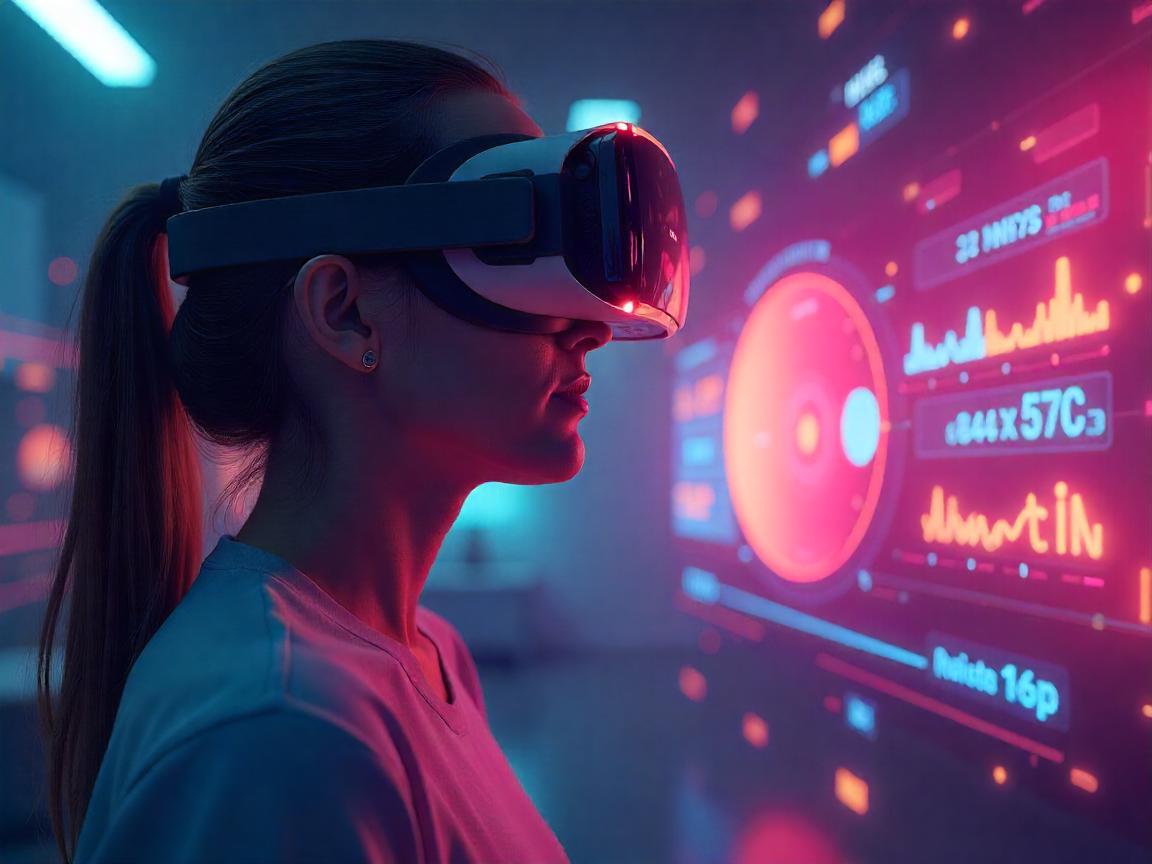
When Games Begin to Feel You
Think of a game that got you first and not because of the twist in the plot, but because of something more profound? Nature said to itself, Look, you are anxious, perhaps even frustrated, and changed its course so as not to bore you? It does not come as a coincidence any longer. It brings us to the age of AI-based orchestration of emotions where the narratives and the experiences are evolving in games and virtual reality. These tools do not read your entries, they read you, through your face expressions, your voice tone, your pressure on the controller.
This is not an imagination. It is already going on. Emotion-recognition engines are being created by companies such as Emteq Labs or Affectiva that can process micro-expressions, biometrics and volume of speech in real-time. Whispers in the Fog was a 2025 indie VR game that, in June of that year, quietly game-tested the idea of emotion-driven story variations during closed beta. The result? Based on a developer post on GitHub, unsuspected emotional appeals were reported by more than 63 percent of gamers in response to in-game reactions. That is a number that cannot be overlooked.
How Emotion Orchestration Actually Works
The idea of emotion orchestration is very tricky. AI will watch and hear you as you play and adjust the storyline of the game or its tempo depending on your mood. However, beneath the surface, it is a union of ideas: machine learning, psychological behavior, biometrics and interactive design. Such models as OpenFace 2.0 can trace eyebrow twitches and eye tracking and NLP engines such as ChatGPT-Voice can trace the elevation of the voice. Such models do not simply guess at what mood your in but compare patterns in real time to pre-learned emotional datasets.
In a survey conducted by the Game Developers Conference (GDC) in 2025, already forty-two percent of studios developing VR or AR experiences claimed to be experimenting with adaptive emotional frameworks, up dramatically (in percentage terms) from four years earlier when only fourteen percent of studios were doing so. One of the most interesting examples here was that EchoVibe VR detected voice modulation, and it so happened that NPCs would respond to the player being hesitant or angry. Players stared that it was so uncannily real.And even though it’s easy to assume it’s sci-fi, researchers have tested this technology in healthcare and driver safety for years. Games simply followed suit.
Real-World Magic: When Narrative Meets Mood
The actual beauty of emotional design is not all about automation, but it is all about you. Even in HarmonAI’s latest prototype (launched April 2025), the text-shifting game aims to transform not only the text, but the entire scenes. Boredom creates urgency. It relieves you if you feel scared. Such fluidity is transforming how we design narratives. Authors now take into considerations emotional branches and not only the plot options.
It is like improvised jazz.The essence music is present, however, all other elements seem to twist and curve to the mood of the listener. We can compare emotion orchestration to the Miles Davis of game design—eternally adjusting, improvisational, and soothing. Celia Hodent formerly of Fortnite said that this method generates psychological states of flow larger stories in games are unattainable. It is not only a witty saying, but also the new era in storytelling.
But Wait—Who Controls the Mood?
Naturally, this is the dark side of intimacy. Since games gather emotional information, this consideration of consent and manipulation quickly appears. Does your apprehension cause the game to be more hardcore, are you still playing due to fun, or are you being requested to get engagement statistics? Algorithm Watch, an AI-monitoring organization, earlier this year cautioned that real-time biometric modelling in games will be “ethically problematic, particularly amongst younger players.”
What’s even worse is that companies usually hide the disclosure of emotion tracking under piles of legalese in privacy policies. Should the game allow the players to view what it believes they experience? And what about establishing the advertisers, will NPCs ever advise you about therapy applications when you appear to be under stress?
Conclusion: Games That Feel Could Change Us
Being an author who worked on indie games and also worked with AAA studios, this technology is both thrilling and worrying. It delivers on additional human games, stories that will react like a pal or treatment professional. However, it opens another door which we are unable to close easily. The magic is in the empathy yet the danger is in the exploitation.
Interactive storytelling is a thing of the past because of emotion orchestration. It is not the question of whether games can feel us back but whether we can be ready to see what the reflection will tell us.