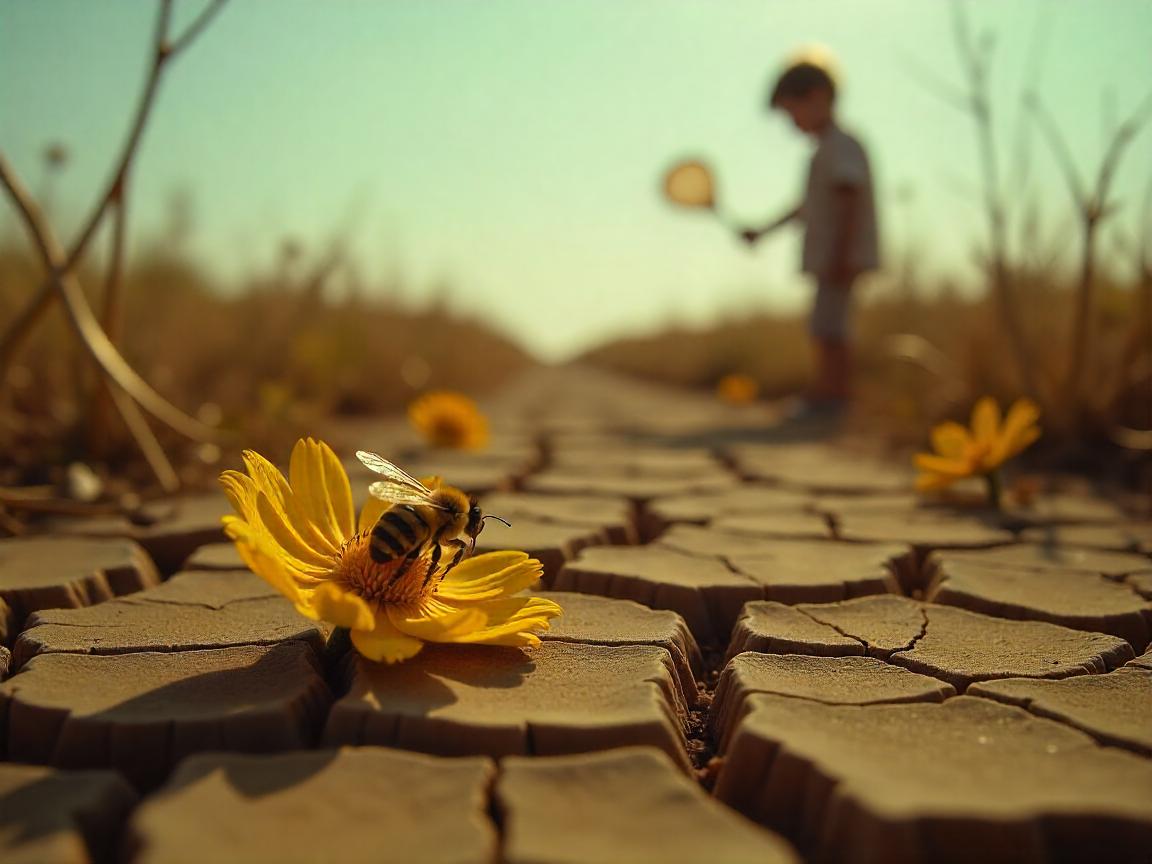
Just open a window early in the morning, and it does not seem to be right. Not a visitatory buzz of bee or flitting of moth about dinner porch lights, not a critter chirp to be seen anywhere. Insects have always been in the background as members of our environment but today their absence will be the most deafening silence of all. A broad new 2025 meta-analysis, published in Science Advances, indicates that not only is the insect population decline a reality, but that it is also increasing, with more than 70 percent of biomass decline over the past 30 years in some areas. The statistics are a rather dark reality, which we cannot turn a blind eye to anymore.
What the Latest Research Is Really Telling Us
Although the reports of so-called insect Armageddon have been floating around since years, the latest statistics generated by means of international monitoring systems and scientific journals are irrefutable in extent and regularity. The Rothamsted Insect Survey, which spans the longest period of data points in the world, showed a 66 percent drop in the number of flying insects since the 1970s in the UK. In the Luquillo rainforest in Puerto Rico, an allegedly pristine paradise, entomologists observed an insect biomass reduction of turn-down by tenfold over the years 1976-2012 that astonished even the most experienced scientists. Novel 2025 accounts offered by the Global Biodiversity Information Facility now indicate comparable losses of earlier overlooked tropical regions such as the Congo Basin and Southeast Asia.
This is not only the loss of a few species, it is the disintegration of whole ecosystems at their most basic and fundamental strands. The canary is dead as was tactlessly put by Dr. Tara Chapman, a pollinator ecologist at Colorado as she recently remarked on a feature by the National Geographic: We are still wondering whether the coal mine is safe or not.”
What’s Driving the Collapse? It’s a Perfect Storm
Insect numbers are declining rapidly with no single thing to blame- it is the death by a thousand cuts. To start with, overuse of neonicotinoid and pyrethroid pesticides still cause sub-lethal effect to bees and butterflies, thus making them unable to navigate, mate, or feed. Throw in the fact that their habitat is getting carved up in the name of urban sprawls and monoculture farms and there is nowhere for these wee marvels of biodiversity to go.
Then there is climate anarchy. These insects are cold-blooded and extremely sensitive of temperature change. Long droughts in southern Europe have already caused an immense destruction of the populations of pollinating beetles and hoverflies. Warmer seasons have caused variation of temperatures, which has altered the breeding patterns of dragonflies, one of the oldest species of insects on earth, in Japan. All these stressors are now piling in concurrence, making recovery more complicated as well as extinction probable.
Key Impacts We’re Already Seeing
Assuming insect loss is just an issue of beekeepers with backyards will be quite a mistake. They are these minute organisms which hold up everything including water quality and agriculture.
- Direct threats are on food security. More than three-fourths of the major crops providing food to the humans in the world rely on insect pollination. Almond industry which has a net worth of more than 5 billion dollars is already paying triple renting to rented diminishing bee colonies in California.
- The species of birds and bats are disappearing. A Cornell Lab report showed that the North American bird population had fallen by 30 percent due to the lack of insect prey in 2023.
- Water loss of aquatic insects is polluting water. A decrease in mayflies and stoneflies reduces filtration in rivers of the U.S. mid west and India and increases algal blooms.
Real-World Example: The Dutch Flower Strip Revival
The Netherlands has found quite a unique solution which is yielding positive outcomes. Now farm owners in the area have begun sowing so-called flower strips between rows of harvested crops: a variety of wildflower zones that serve as a refuge to insects. A 2024 study in Wageningen University indicated a 45 percent rise in natural bee abundance and measurable rise in crop productivity in survey farms. It is not merely policy, it is evidence that small and focused measures can make an enormous ecological pay-off.
Well, not all this is about farmers and governments. Citizen science projects such as iNaturalist and Pollinator Pathways are getting people to bring biodiversity back home by planting a patch of milkweed in their backyards, or setting up a bee hotel.
So What Now? Why This Isn’t Just About Bugs
We are not talking about a niche issue of a conservationist. It is a crisis of the planet. The insects are keeping the fragile balances of life, beginning with romantic decay, pollination, repellent control and their destruction is an alarm clock to systems so much greater than we can dream. Being a person who has spent some of my childhood raising monarch caterpillars with my grandmother, it is heart breaking to me to know that my niece now is unable to find even a single one on the same milkweed patches. The transition is actual. And it is personal.
It is a straight forward, yet urgent endeavor that we are stuck with, to either normalise the silence or be proactive before the buzz becomes completely gone. This crisis has impact on your life whether you are ecologist or farmer or just a person who cannot live without firefly flicking in the July days. Now we are ready to begin to listen to the silence -and act.